If you want to start a spirited debate at a facilities conference, bring up the air in senior living buildings. Not the temperature, the air itself. The stuff moving through thousands of feet of ductwork, past aging coils and tired diffusers, carrying whatever your last construction project shed plus a sampler pack of pollen, skin flakes, lint, and the occasional mystery glitter nobody will ever take credit for. For an office, this is a nuisance. For senior living communities, air quality can tilt directly into health outcomes, staffing headaches, and surprise budget leaks you could have avoided.
I have walked properties where a slight change to duct cleaning frequency calmed a seasonal cough trend, shaved five figures from the electric bill, and ended an endless stream of work orders politely titled “odd smell in corridor.” The trick is pairing commercial duct cleaning with the special realities of senior living, then holding a vendor to healthcare-grade discipline without turning the place into a construction zone.
Why air moves differently in senior living
Most senior living buildings are a mashup of use cases. Resident apartments with intermittent kitchen and bath exhaust. Group dining where hood systems pull hard during meal service. A salon where hairspray somehow colonizes the return plenums. Fitness rooms that don’t get fitness-level ventilation. Memory care neighborhoods with doors that stay shut for good reasons, and nurses stations that never sleep. The building’s HVAC reflects this split personality. Supply trunks are old in one wing and newer in the addition. Fan coil units hum along in apartments, while a pair of big air handlers feed common areas and hallways.
Older adults are more likely to have asthma, COPD, or cardiac sensitivities that magnify any insult from particulates or bioaerosols. That is not abstract. If a coil chokes on lint and growth, your supply air temperature drifts, humidity creeps up, and suddenly the building has that soft, sweet smell everybody politely calls “musty.” High humidity supports dust mite populations and microbial growth on interior duct liners. Residents sleep lightly, staff open windows against policy, and your energy costs spike because the system is always catching up.
Commercial duct cleaning sounds simple, but in this setting it must serve clinical thinking. Improve indoor air quality, reduce allergen and irritant load, restore design airflow, and lower the housekeeping bill that quietly balloons when diffusers snow dandruff onto dark furniture. Do that, and you will feel it in fewer work orders, a steadier census, and a maintenance team that can finally stop replacing stained ceiling tiles on Fridays.
What actually accumulates in ducts
The majority of debris in supply ducts is benign but not helpful: construction dust, skin cells, textile fibers, and outdoor particulates that slip past filters during high pollen days. Kitchen and laundry exhaust do their own thing. Kitchen exhaust transports grease, which can be a fire risk if cleaning lapses. Laundry exhaust builds lint that loves to migrate into shaft cavities and backdraft into spaces you swore were sealed. Apartment fan coils often collect a cocktail of lint, pet dander where pets are allowed, and the talc that seems standard issue in every guest bathroom.
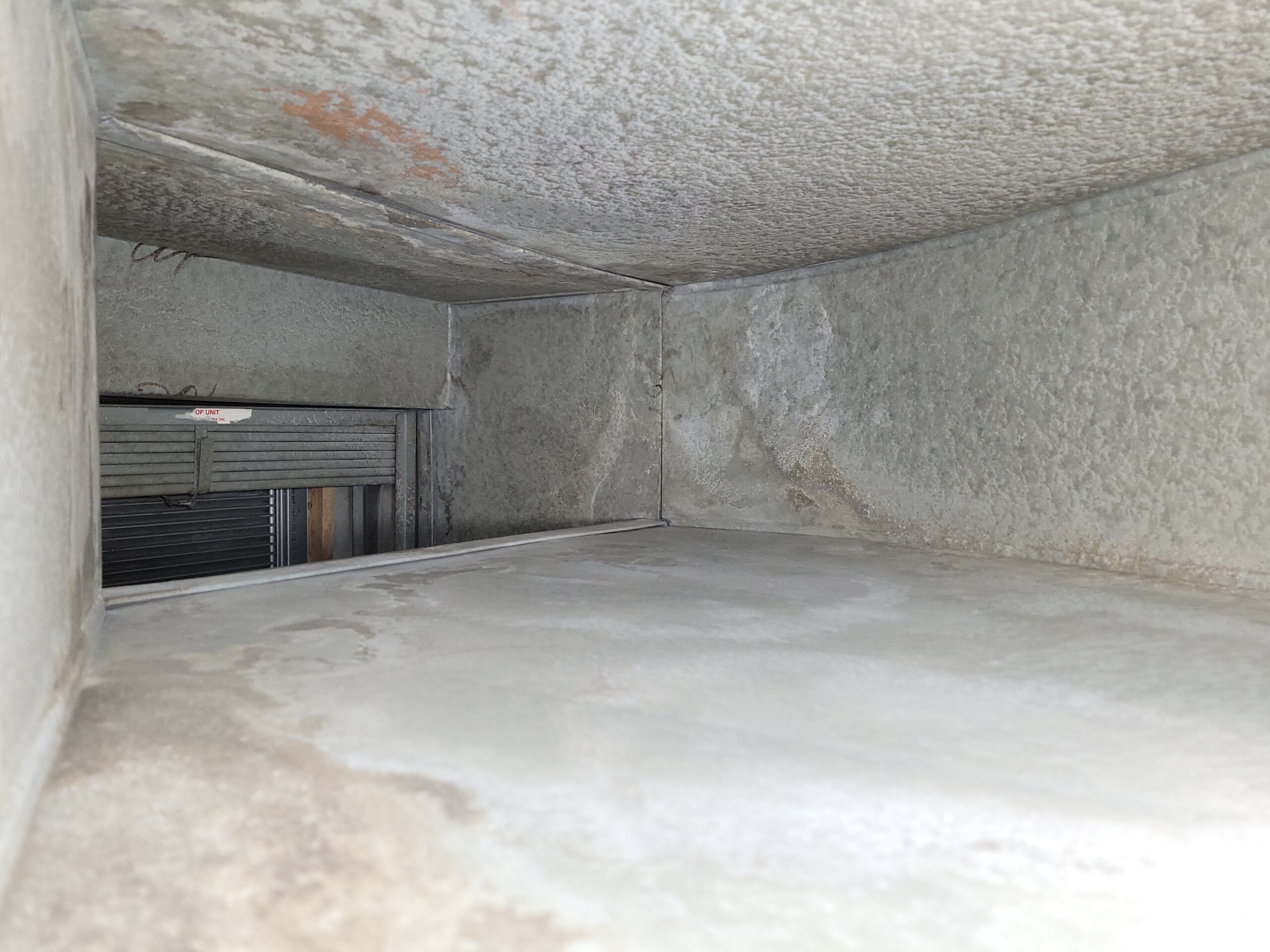
On the microbial front, the duct interior is less the villain than the moisture sources feeding it. Drain pans with a quarter-inch of water, insulation that wicked a past roof leak, a sweating reheat coil, or a poorly sealed access door that pulls humid air from a wall cavity. That moisture helps colonies anchor to interior liners or coil fins. You see it as patchy discoloration, not a shag carpet, but you feel it as odors and sticky air.
Both dust and biofilm change how the system works. Dirty coils add pressure drop, so fans ramp up. Air leak paths around gaskets grow because of vibration and age. Filters watch their useful life shrink. Air distribution gets lopsided. A resident at the far end of the branch writes three work orders, and you send someone to adjust the damper as if the problem lives only at the diffuser.
The risk if you get duct cleaning wrong
A poor commercial duct cleaning job can do more harm than doing nothing. Push debris without maintaining proper negative pressure and you redistribute contaminants into occupied areas. Use the wrong brush on lined duct or flexible runs and you scuff the surface into a fuzzy mess that traps more dust. Spray a “disinfectant” because it smells reassuring, never mind that you did not clean to bare metal first or check compatibility with insulation. I have seen operators inherit an odor that took months to flush out after someone fogged a quaternary compound into a building with residents who are sensitive to fragrances.
There is also the noise factor. Rotary brushes, air whips, and vacuums hum along nicely in an empty office at 10 a.m. They sound like a power tool rodeo when your residents are napping. If you do not plan the schedule, coordinate nurse notifications, and set realistic time blocks, you build more complaints than you remove dust.
Standards that keep you honest
NADCA ACR, the Assessment, Cleaning, and Restoration standard, is the go-to reference for commercial duct cleaning. It lays out visual cleanliness criteria, source removal practices, and documentation. ASHRAE 62.1 helps you gauge ventilation targets, and the filtration and humidity thresholds that influence how fast ducts get dirty. NFPA 96 governs kitchen hood and duct cleaning, and it is not optional if you have a commercial kitchen. NFPA 90A covers air duct construction and fire safety considerations relevant to access doors and the treatment of flexible connectors.
In a senior living setting that approaches healthcare, look at infection control risk assessment practices, even if your jurisdiction does not mandate them outside skilled nursing. Set negative air, define project boundaries with containment, and plan swing spaces. It sounds dramatic until you think about a resident with a new hip who will cough for a week if you vent dust into their corridor.
How often is often enough
There is no universal schedule. A stable building with MERV 13 filtration upstream of coils, tight housekeeping, and no significant renovations may go three to five years between full-system cleanings, with coil and fan section cleaning every year or two. A property with in-suite fan coils and a busy laundry that vents through long duct runs will need more frequent attention. I like a cadence where you audit annually, clean coils and air handlers on a one to two year rhythm, and clean ductwork in higher load zones every two to three years. Kitchen exhaust is its own calendar, often quarterly to semiannual depending on volume and cooking type. If you remodel a wing, clean that segment before turnover, not six months later when the drywall dust cements itself to the liner.
Anatomy of a thorough cleaning
A proper job starts with a map. Literally a marked-up plan set or digital floor plan where each air handler, trunk, and branch is labeled. You want to see start and end points, access doors, damper locations, and the sections of lined versus unlined duct. Next, a pre-clean inspection notes visible debris, microbial growth, damaged insulation, and any suspect materials. If your building dates from the era of asbestos-containing duct insulation, stop and test what you are cutting before you cut anything.
The cleaning itself relies on establishing negative pressure with a vacuum collection unit, usually filtered to HEPA at 99.97 percent at 0.3 microns. For a medium air handler, expect a vacuum pulling on the trunk while technicians create access openings to agitate debris with rotary brushes or compressed air whips. The idea is to break debris loose and capture it at the vacuum, not blast it down to the nearest diffuser. Branches are isolated as needed with temporary foam plugs or damper adjustments. Lined duct calls for softer brushes, often nylon, and you test in a small area before committing. Flex duct that has collapsed or kinked might be safer to replace than to clean aggressively.
Coil cleaning deserves its own hour. A fouled coil is usually the biggest airflow thief, and cleaning it involves more than a spray bottle and high hopes. You want a low pressure rinse that pushes through the fins in the correct direction, an appropriate cleaner that matches the coil metal and the type of soil, and a protected drain pan with functioning traps. I have pulled a handful of door labels and a bouncy ball from a pan. Nobody missed the labels. The bouncy ball was a mystery solved by a delighted grandchild.
VAV boxes and terminal units collect their own lint reserves and sometimes a layer of sticky dust along reheat coils. They benefit from careful vacuuming and, if accessible, a rinse of the coil face. Replace any missing access panels and weatherstripping before you button up. Then test static pressure and measure airflow at a few key diffusers to confirm the work did more than create a neat invoice.
Working around residents without making enemies
Noise, air movement, and temporary chemical odors are the chief irritants for residents and staff. I like to set up a cleaning window for each zone that avoids meal times, medication passes, and group activities. A wing-based approach keeps the disturbance small. Post simple notices with what, when, and who to call if someone feels sensitive. In memory care, have a familiar staff member present when technicians move ladders or open ceilings. Put drop cloths down like you are meeting the most detail oriented family on a tour.
Containment is not just for drywall work. Light plastic Advanced Environmental Service barriers with zip doors around AHU rooms, plus tack mats and clean paths, keep dust local. Negative air machines set to exhaust outside, or through a HEPA filter bank, help keep corridors clear. The best teams behave like quiet stagehands. If you cannot picture your vendor meeting a resident’s adult daughter in the hall and charming her with two sentences and a smile, keep looking.
A short checklist that saves headaches
- Confirm after-hours or quiet-hour windows for each zone, with nursing and dining on the invite list. Verify filtration upgrades and stock new filters to install post-clean, not pre-clean. Test access door locations and order additional doors ahead of time to avoid last-minute fabrications. Arrange temporary cooling or heating for sensitive zones if the system must be offline longer than expected. Line up photo documentation requirements so before and after images match locations and angles.
What good documentation looks like
You should receive a report with mapped zones, a log of access points created, pre and post photos that a layperson can align by looking at light fixtures or coil supports, and notes on damaged or suspect components found. A few airflow or static pressure readings provide a quantitative anchor. If they used any chemical cleaner or sanitizer, you want product names, dilution, and contact time, plus safety data sheets. Keep this packet with your life safety documentation, because surveyors and insurers care about maintenance history more than maintenance promises.
Sanitizers, coatings, and other tempting shortcuts
The lure of fogging a sanitizer through the ducts is powerful when schedules feel tight. The trouble is, fogging without physical cleaning mostly creates odorous residue on dust. Source removal first, always. If microbial growth persists on interior liner in a limited location, a compatible encapsulant can lock fibers and create a smoother, more cleanable surface. Make sure the product is tested for HVAC use, low VOC after cure, and suited to the temperature swings in that duct section. I avoid perfumes in any product used near resident rooms unless there is no alternative.
Energy, money, and the stuff finance actually believes
Dirty coils and restricted ducts alter the fan laws in painful ways. A half millimeter of biofilm can boost coil pressure drop enough to drive a variable speed fan to work 10 to 20 percent harder. Over a cooling season, that is a few to many thousand kilowatt-hours, not counting chiller or compressor run time. On a 200 bed community with two main AHUs, I have seen post-cleaning energy use fall by 4 to 7 percent in the shoulder months and around 2 to 4 percent at peak, verified with utility data and normalized for degree days.
Housekeeping sneaks into the savings column too. Diffusers that shed dust halos make weekly wipe downs mandatory. Clean the ducts and coils, and those halos fade. Pest control calls often dip after a thorough cleaning and sealing pass, especially where return plenums double as ad hoc storage for lint and lost ceiling tiles. If you need a budget story, bundle energy, housekeeping, and unblocked vents into one line, then add the not-so-soft benefit of fewer resident complaints.
The renovation wildcard
If you renovate, you can either plan to keep dust out of the mechanical system or plan to clean it out later, and the former is cheaper. Seal return grilles at the work face. Keep temporary filtration on return paths at MERV 11 or higher. Run construction zones on dedicated negative air that does not borrow the building’s returns. When the dust settles, clean the immediate ductwork and coils that served the zone. Your nose will tell you when someone cut corners. Fresh paint and new carpet should not smell like a workshop when the punch list closes.
Fire safety is part of cleanliness
Lint and grease are fuel. Kitchen hood and duct systems require cleaning intervals based on cooking volume and type, often quarterly for high volume. And yes, kitchen odors migrate through adjacent mechanical pathways when the hood and make-up air fall out of balance. Dryer exhausts, especially those that stack through multiple floors, deserve regular brushing and vacuuming. Lint traps capture the large fluff, not the fine fibers that drift downstream and accumulate on duct ridges. A dryer that takes two cycles to dry a load is not a resident’s fault every time.
Measuring success without hiring a lab
For routine projects, stick to practical metrics. Visual verification to NADCA’s criteria is a start. Add coil delta P before and after. Log static pressure on the supply side at design fan speed, and see if you restored margin. Measure air temperature differential across the coil under similar load. Walk the common areas a week later and look for new dust halos at diffusers. Check work orders for air complaints and odor notes for a month before and after. If you want to go deeper, short-term particle counts in representative spaces can show trend improvements, but they vary with outdoor air and activity, so interpret with caution.
Choosing a vendor who understands people, not just ducts
A good commercial duct cleaning partner behaves like a quiet general contractor with a very specific toolbag. They coordinate, stage, protect, and leave your building more orderly than they found it. Certificates matter, and so does attitude. Ask for references from other senior living or healthcare-adjacent clients. Then call them. The right team will talk as comfortably about HEPA capture and coil fin density as they will about shift change and memory care boundaries.
Here is a tight set of screening questions that separates pros from tourists:
- What standard do you follow, and can I see a sample report that matches my building type? How will you sequence work to limit downtime in resident areas, and who owns daily communication with nursing? What is your plan if you find compromised liner, mold-like growth, or asbestos-suspect insulation? How do you verify negative pressure at the point of agitation, and what filtration do your vacuums use? Will you include coil cleaning, terminal unit service, and resealing access doors, or are those add-ons?
A tale of two wings
One property, twin wings, shared central plant. West wing housed independent living, east wing housed assisted living and memory care. Same age, same filters, same staff. The east wing generated twice the air quality complaints, plus an odor described as warm cardboard. We scheduled a sectional cleaning starting with air handlers and coils, then the returns and supplies for the east wing. The returns told the story. An old roof leak had left the interior liner patchy, and the main return plenum sat above a laundry that had been expanded without rebalancing. Negative pressure pulled laundry humidity into the plenum.
We replaced a segment of liner, resealed penetrations with mastic, cleaned coils properly, and rebalanced to respect the expanded laundry exhaust. After cleaning, we measured a 0.3 inch water gauge drop in supply static at the same airflow setting, and a 4 to 6 degree improvement in sensible cooling at the farthest apartments during a mild day. Complaints fell to nearly zero for three months, then settled into a baseline that matched the west wing. Housekeeping stopped chasing dust rings. The smell left, and, best of all, so did the passive aggressive sign in the elevator about “mystery odors.”
Pitfalls even good teams forget
Access doors are consumables. If a contractor cuts perfect doors and never returns to reseal, they are doing half the job. Gaskets compress, screws back out, and microscopic leaks act like vacuums at elbows. The tiniest whistle will move dust from a cavity you forgot existed. That is how those brownish streaks appear along seams six months after cleaning. Ask your team to reseal and photograph the sealant and gaskets as part of their exit.
Flex duct, especially older runs, should be inspected ruthlessly. Long stretches that snake across ceiling grids often deserve replacement, not cleaning, because the inner liners delaminate. Chasing clean in a duct that no longer holds shape wastes money you could spend on a new run that breathes freely.
Fragrance is not cleanliness. If the building smells like a mint candy factory after a visit, you have a masking agent, not proof of hygiene. The only legitimate lingering smell should be the faint, clean-metal tang that fades in a day.
Where commercial duct cleaning fits in the bigger plan
Think of duct cleaning as a reset. It restores mechanical systems to the point where filtration and normal maintenance can do their jobs. The real gains stick when you pair cleaning with upstream fixes. Step up to MERV 13 filters if your fans can handle the pressure drop, or use a high efficiency media with a decent dust holding capacity so it does not load in a week. Keep humidity between 40 and 60 percent where possible. Maintain drain pans, traps, and insulation. Train housekeeping to report stained diffusers, sweating pipes, and any room that feels stuffy, because those are early warning lights for the next round of cleaning or the fix you need before it.
You will still schedule periodic commercial duct cleaning. Senior living is never dust-free, nor should it be. People live here. They cook, knit, throw birthday confetti that violates several municipal codes of decency, and sometimes wedge a towel into a grille because it feels drafty. The building earns a deep clean. The residents earn air that feels crisp without smelling like chemicals. Staff earn fewer headaches. You, perhaps, earn a quiet quarter where the maintenance backlog shrinks and finance wonders what you did differently. You can tell them, or you can let them think you discovered a new energy rate. Your secret.
The short version, whispered
When you approach commercial duct cleaning for senior living facilities, act like a clinician. Diagnose the conditions that created the debris and growth. Treat the causes as you clean the symptoms. Stage the work to respect sleep, meals, and memory care rhythms. Document like a surveyor will read it. And choose partners who value people as much as pressure drop. Do those things, and the building breathes easier. So will everyone in it.